'/%3E%3Cpath%20d='m454%20250-4%204-4-4c-3%203-9%205-9%205l2-5q-9%205-10%203c-1-1%2010-12%2012-26%200-1%203-18-8-13-2%201-4-5%200-7%203-2%2010-1%2011%200q1-2%203-2c2%200%2011%201%2014%206%202%205%202%2014%202%2015q0%2015%208%2027c-1%201-8-2-8-2v3s-7-2-9-4m-12-32c4%2014-9%2031-11%2033%2011%200%2012-10%2015-24l1%201c-2%2011-5%2022-8%2025l7-4%203-22h1l-3%2022%203%203%203-3-1-21h1l1%2021%208%203c-5-8-6-25-6-23h1c2%2012%203%2022%2012%2022-3-3-8-16-7-25q0-12-2-15-6-3-10%202-2%202-5-1c-2-2-1-2-6-4q-7-2-6%205s9-3%2013%205zm7-8q-3%201-1%202%203%200%201-2'/%3E%3C/g%3E%3C/svg%3E)
Once popular for attacking AI ASCII smuggling is embraced by spammers across the globe as a mainstream evasion technique. In 2026, cybersecurity experts are witnessing a massive shift in how unwanted emails bypass modern inbox protections.
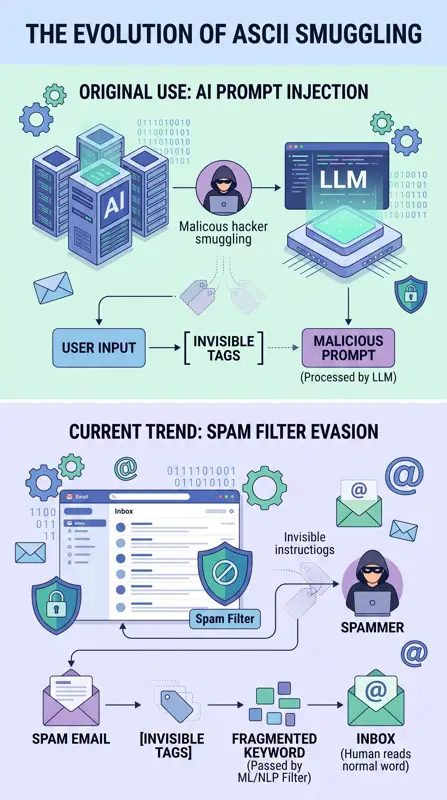
Historically, invisible Unicode tags were highly specialized tools. They were primarily utilized by hackers trying to execute stealthy prompt injection attacks against Large Language Models (LLMs). Today, the landscape has entirely transformed.
The Evolution: Once popular for attacking AI ASCII smuggling is embraced by spammers
To understand this threat, we must look at how special Unicode tags function. These 128 tags mimic the American Standard Code for Information Interchange. However, they remain completely invisible to the human eye.
Because these characters exist purely at the text-processing level, they manipulate how computers read words. This is exactly why once popular for attacking AI ASCII smuggling is embraced by spammers trying to beat automated filters.
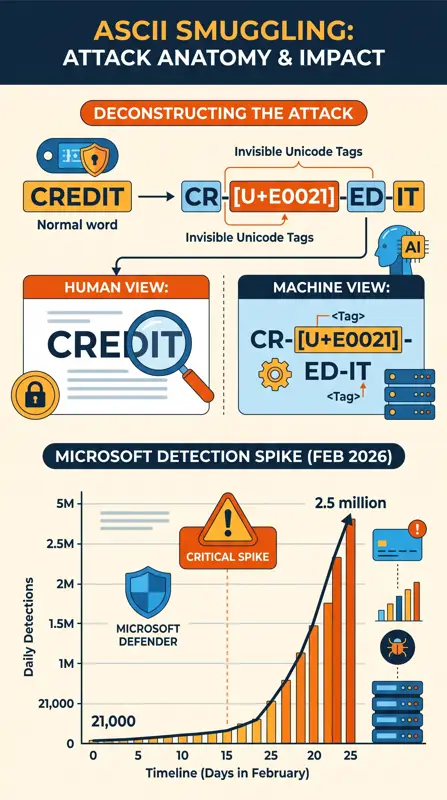
When an email contains malicious trigger words like “funding” or “credit,” traditional spam filters catch them instantly. By injecting invisible Unicode, the word is splintered. The human sees “funding,” but the machine reads “fun,” a random tag, and “ding.”
“The intent is inverted, but the mechanism is similar, and a user’s suspicions are not raised.”
How Once popular for attacking AI ASCII smuggling is embraced by spammers in 2026
The transition from AI hacking to spam campaigns was rapid. Spammers realized that Machine Learning (ML) and Natural Language Processing (NLP) classifiers process text via tokens.
If an invisible U+E0020 character is placed inside a familiar token, the entire classification model breaks down. The tokenizer emits an unknown sub-token, successfully letting the spam message slip into your primary inbox.
| Evasion Tactic | Target System | Visibility to Humans |
|---|---|---|
| Keyword Stuffing | Legacy Regex Filters | Highly Visible |
| ASCII Smuggling | Modern NLP & ML Models | Completely Invisible |
Microsoft’s Data: Once popular for attacking AI ASCII smuggling is embraced by spammers
Earlier this year, analytics from major tech firms highlighted a terrifying spike. Detections of ASCII smuggling signatures skyrocketed almost overnight, proving that this tactic is now a favorite among bulk senders.
According to reports from platforms like Microsoft Defender for Office, daily detections jumped from a mere 21,000 to over 2.5 million within a four-day window.
For more technical details on how global networks monitor these threats, you can review the latest findings from Microsoft Security Research.
| Timeline (2026) | Daily Detections | Threat Level Status |
|---|---|---|
| Early February | 21,000 | Low / Baseline |
| Mid February | 1.3 Million | Critical Spike |
| Late February | 2.5 Million | Severe Epidemic |
Why Once popular for attacking AI ASCII smuggling is embraced by spammers Continuously
The primary reason for sustained usage is simple: it works. By neutralizing the advantages made possible by natural language LLMs, attackers ensure their phishing links reach potential victims.
Unless an email filtering system performs Optical Character Recognition (OCR) over a visual image of the text, it will likely miss the underlying manipulation.
“By placing an invisible tag inside a trigger word, the spam filter sees fragmented garbage, but the user reads a perfectly coherent sentence.”
Defending Networks: Once popular for attacking AI ASCII smuggling is embraced by spammers
Developers are now racing to program better filters. Security teams must account for ASCII smuggling at the normalization phase of text processing.
If the system strips out the U+E0020 character before the tokenizer evaluates the email, the original spam trigger word is restored. This allows standard classifiers to flag the message correctly.
As we move further into 2026, the reality is clear. Once popular for attacking AI ASCII smuggling is embraced by spammers, and our defensive software must evolve equally fast to stop it.
Frequently Asked Questions
What exactly is ASCII smuggling?
It is a technique utilizing a specialized block of Unicode tags that are readable by computer processors but completely invisible to humans.
Why is once popular for attacking AI ASCII smuggling is embraced by spammers today?
Spammers use it to hide trigger words like “credit” or “funding” from Machine Learning spam filters by splintering the words with invisible tags.
Can users see the smuggled characters in an email?
No, the characters are designed to be invisible. The user simply reads normal text, making the email look legitimate and safe.
How did this technique originate?
It gained popularity two years ago as a method to hide malicious prompt injections directed at AI agents and Large Language Models.
Did Microsoft detect this new spam wave?
Yes. Microsoft Defender for Office reported a massive spike, with daily signature detections jumping from 21,000 to 2.5 million within days.
How does invisible text trick a modern AI spam filter?
Modern filters split words into tokens. An invisible Unicode tag disrupts this process, causing the filter to read unknown fragments instead of the actual spam word.
How can developers block this threat?
Developers need to update normalization protocols to strip out specific invisible Unicode characters before the text is evaluated by the tokenizer.
Disclaimer: This article is for informational purposes only and does not constitute professional cybersecurity advice. Always consult with certified IT professionals for securing your networks.