The gaming community is currently ablaze with anticipation as a massive leak regarding the playstation 6 has just surfaced. Here in 2026, we are edging closer to the official unveiling of Sony’s next technological marvel. Speculation has been rampant for years, but a recent podcast episode has dropped what might be the biggest bombshell yet.
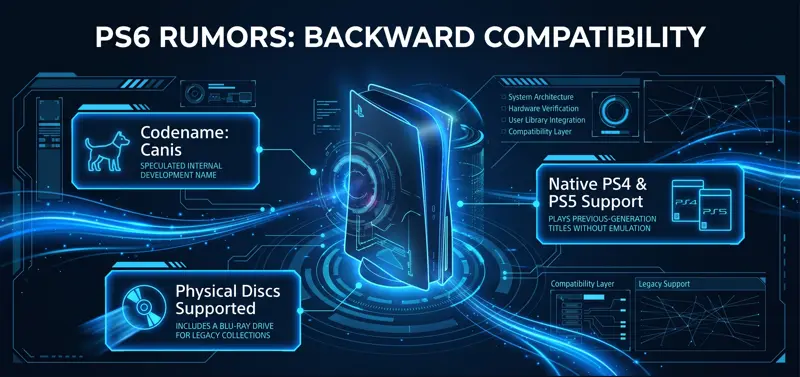
According to this leak, the upcoming console will not just push graphic boundaries, but it will also honor your existing game library. The claim is bold: total, uncompromised backward compatibility for all your PS4 and PS5 titles. If true, this fundamentally changes how we view the transition to the new generation.
Historically, generational leaps in console gaming meant leaving your old favorite games behind in the dust. Players still remember the frustration of the PS3 era and the inability to play many classic PS2 discs. However, this new rumor suggests Sony is aiming to make their upcoming hardware an all-encompassing powerhouse.
The Broken Silicon Leak and the Canis Codename
The core of these exciting Sony PS6 rumors originates from an episode of the Broken Silicon Podcast, specifically hosted by the well-known tech channel Moore’s Law Is Dead. Known for deep dives into hardware architectures, the podcast highlighted an internal document that has set the internet on fire.
During the episode, the hosts discussed a heavily guarded document detailing the next-gen PlayStation console. Tom, one of the primary voices on the podcast, explicitly stated that he wanted to leak specific details about the project’s internal workings. He revealed that the console is operating under the Canis codename leak.
What makes this document so pivotal is its explicit mention of older hardware support. According to Tom, the text plainly reads: “back compat PS4, PS5.” There is no ambiguity in this phrasing. It suggests a native, hardware-level integration designed to run previous generation software seamlessly.
“I just wanna leak this today: The PS6, yes, it has backwards compatibility to 4 and 5, and they explicitly say it all over the place.” – Moore’s Law Is Dead
This level of gaming backward compatibility is a massive undertaking. It requires the new silicon to perfectly emulate or natively execute the instruction sets of the older AMD Zen 2 and Jaguar architectures. Because Sony has stuck with the x86 architecture since 2013, this technical hurdle is much lower than it was in the Cell Broadband Engine days.
If Sony executes this correctly, the transition for gamers will be frictionless. You won’t need to keep your old console plugged into your television just to finish a campaign you started months ago. Everything will exist within one unified, high-performance ecosystem.
| PlayStation Generation | Backward Compatibility Status | Format Supported |
|---|---|---|
| PlayStation 2 | Full PS1 Support | Physical Discs |
| PlayStation 3 | Partial (Early models only for PS2) | Physical / Digital |
| PlayStation 4 | None (Cloud streaming only) | PS Now / PS Plus Premium |
| PlayStation 5 | Full PS4 Support | Physical / Digital |
| PlayStation 6 (Rumored) | Full PS4 & PS5 Support | TBD (Likely Physical & Digital) |
Physical Back Catalogs and the Handheld Revolution
The confirmation of this feature would be a massive victory for physical media advocates. In an era where digital storefronts dominate, many hardcore gamers have amassed extensive, physical back catalogs of PS4 and PS5 discs. Knowing these investments are safe provides immense consumer confidence.
Gamers will not be forced to repurchase “remastered” digital versions of games they already own. Instead, they can simply insert their existing discs into the new console. It is highly likely the new hardware will automatically apply performance patches, utilizing its immense power to boost frame rates and resolution.
But the leak didn’t stop at the traditional home console. The podcast also dropped heavy hints regarding a portable companion device. The rumored PS6 handheld specs are perhaps the most mind-bending aspect of this entire report.
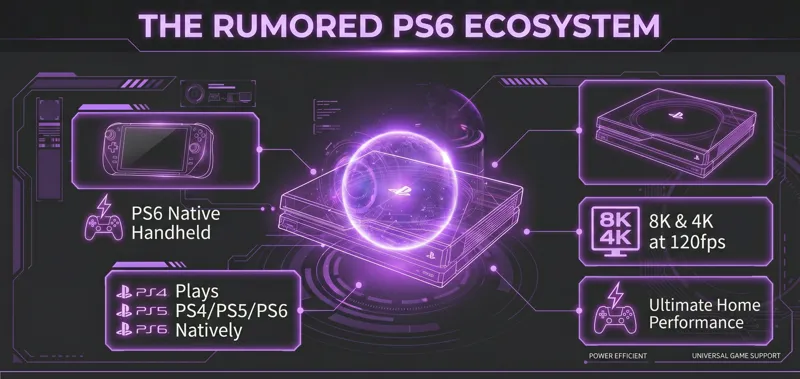
According to the document, this companion handheld will not just stream games via Remote Play like the PlayStation Portal. The leak explicitly states that the handheld device will natively run PS6, PS5, and PS4 games. This implies an APU (Accelerated Processing Unit) of staggering efficiency and power.
Imagine carrying the entirety of the last three PlayStation generations in your backpack, running natively without an internet connection.
If a handheld can genuinely play standard PS5 games natively, it represents a massive leap in mobile GPU technology. This would put Sony in direct, fierce competition with high-end portable PCs like the Steam Deck and the ASUS ROG Ally, but with the distinct advantage of the optimized PlayStation operating system.
This dual-release strategy—a high-end home console and a fully capable native handheld—would dominate the gaming market. It caters to the hardcore couch gamer and the on-the-go commuter simultaneously, all bound together by a single, unified game library.
| Rumored Device | Form Factor | Target Native Playability |
|---|---|---|
| PlayStation 6 (Base) | Home Console | 8K / 4K @ 120fps (PS4, PS5, PS6) |
| PS6 Handheld | Portable APU | 1080p / 1440p (PS4, PS5, PS6) |
Taking the News With a Grain of Salt
As exhilarating as these Sony PS6 rumors are, responsible reporting requires a healthy dose of skepticism. The hosts of the podcast themselves noted a crucial caveat: the “Canis” document they were referencing is considered “years old.”
In the fast-paced world of tech development, a few years is a lifetime. Internal roadmaps shift, hardware costs fluctuate, and corporate strategies pivot based on market trends. What was a solidified plan in 2023 or 2024 might look completely different as we progress through 2026.
Sony could have faced thermal limitations with the handheld, or they might have decided that including a disc drive for full backward compatibility is too expensive for the base model. Until we hear directly from the manufacturer, all specifications remain strictly in the realm of rumor.
For the most accurate and up-to-date official announcements regarding PlayStation hardware, you should always keep an eye on the Official PlayStation Blog. When Sony is ready to unveil their next masterpiece, that is where the news will drop first.
While the Canis document proves Sony’s early intent to support legacy software, the final retail hardware may tell a different story. Manage your expectations accordingly.
Ultimately, the inclusion of robust backward compatibility is the smartest move Sony could make. It builds immense brand loyalty, encourages players to maintain their digital and physical libraries, and provides the new console with an instant, massive library of playable games on launch day.
Whether you are a casual player or a dedicated trophy hunter, the prospect of taking your hard-earned PS4 and PS5 collections into the next generation is thrilling. We will continue to monitor these developments closely as the industry marches toward the inevitable reveal.
Frequently Asked Questions
Will the new console play my physical PS4 and PS5 game discs?
According to the latest leaks regarding the Canis codename, yes. The hardware is allegedly designed to support total backward compatibility, meaning your physical discs should work flawlessly, provided the console has a disc drive.
What is the rumored PS6 handheld device?
Leaks suggest Sony is developing a portable counterpart to the main console. Unlike the PS Portal which only streams, this new handheld will reportedly run PS4, PS5, and even PS6 games natively on its own internal hardware.
Are these backward compatibility rumors officially confirmed by Sony?
No. Currently, these are strictly rumors based on leaked internal documents discussed on the Broken Silicon podcast. Sony has not officially commented on their next-generation hardware specifications.
Why is the document being “years old” a concern for these rumors?
Hardware development cycles involve constant revisions. A plan detailed in an old document might have been scrapped or heavily modified due to budget constraints, cooling issues, or shifts in corporate strategy.
Will PS1, PS2, or PS3 games be natively supported on the new system?
The current specific leak only explicitly mentions native support for PS4 and PS5. Older generations are likely still going to be restricted to cloud streaming or digital emulation via the PlayStation Plus Premium service.
How does x86 architecture make backward compatibility easier?
Because the PS4, PS5, and presumably the next console all use similar AMD x86 PC-like architectures, the new system doesn’t have to work as hard to translate the game’s code. It speaks the same foundational language as the older consoles.
Will older games run better on the next-gen PlayStation console?
Historically, newer PlayStation hardware uses “Boost Mode” features to stabilize frame rates and maximize dynamic resolutions on older titles. It is highly expected that PS4 and PS5 games will run at their absolute best on the new system.
Disclaimer: This article is for informational purposes only. The details discussed regarding the PlayStation 6, its codenames, handheld variants, and backward compatibility features are based on unverified leaks and rumors circulating in 2026. Official specifications are subject to change by Sony Interactive Entertainment.