The latest iPhone 18 Pro leaks are already sending shockwaves through the technology industry in 2026. While consumers are still getting acquainted with the current generation of Apple devices, the tech giant is already finalizing its next major flagship. The upcoming September release is promising to deliver some of the most substantial hardware revisions we have seen in years.
According to highly credible supply chain sources, Apple is preparing to completely overhaul the front display aesthetics. These iPhone 18 Pro design changes are not just cosmetic; they represent a fundamental shift in how the device handles biometric security and internal space management.
From an altered display cutout to entirely new internal connectivity components, the next iteration is shaping up to be a monumental release. Let us dive deep into the specific hardware modifications that are currently being tested in Apple’s secretive manufacturing facilities.
The Display & Chassis Evolution
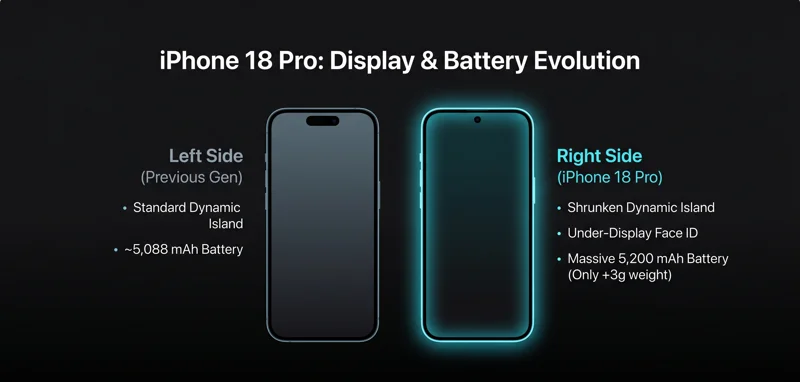
For several generations, the prominent pill-shaped cutout at the top of the screen has been a defining characteristic of Apple’s premium smartphones. However, the era of the large screen intrusion might be coming to an end. The most exciting rumor revolves around a Shrunken Dynamic Island.
Noted supply chain leakers, including prominent figures on Weibo, have indicated that Apple is currently conducting A/B testing on the front display panels. This means the manufacturing partners are producing two distinct prototypes to evaluate yield rates and performance before mass production.
One prototype features the traditional cutout layout we see on current models. The other, however, features a significantly smaller island. This shrinking is made possible by a long-awaited technological breakthrough: Under-display Face ID.
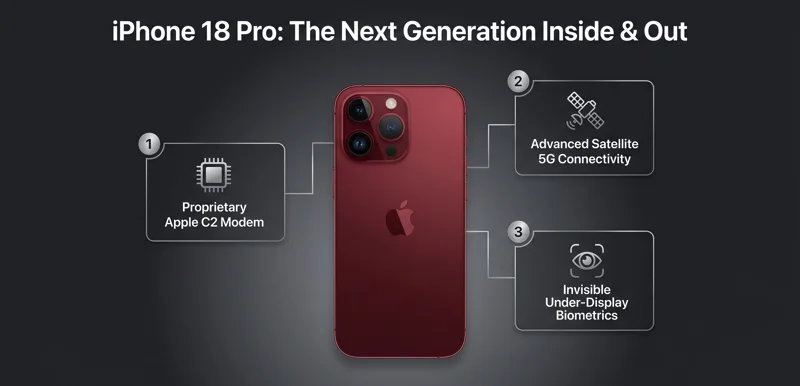
By moving the Face ID RX sensor array completely beneath the active display pixels, Apple only needs a minimal punch-hole for the front-facing camera lens. This drastically increases the usable screen real estate for notifications, media consumption, and full-screen gaming.
| Feature Area | Current Generation | iPhone 18 Pro (Leaked) |
|---|---|---|
| Display Cutout | Standard Dynamic Island | Shrunken Dynamic Island |
| Face ID Hardware | Housed within the cutout | Under-display integration |
| Screen Real Estate | Obstructed top center | Maximized viewing area |
While testing two different display molds in mid-April seems late in the development cycle, it highlights Apple’s dedication to perfecting this new under-display technology. If the yields are high enough, the smaller cutout will become the new standard for the Pro lineup.
Chassis Adjustments and Battery Expansion
Beyond the screen, the physical dimensions of the device are also seeing subtle but highly impactful modifications. Reports suggest a slightly thicker overall chassis for the upcoming models. In the past, thicker phones were heavily criticized, but the modern consumer prioritizes longevity over ultimate thinness.
This slight increase in depth directly translates to massive improvements in iPhone 18 Pro Max battery life. The internal space gained by a marginally thicker frame allows Apple to pack in a significantly larger battery cell.
Supply chain feedback indicates that the battery capacity could jump from the roughly 5,088mAh seen in previous large models to an impressive 5,100mAh or even 5,200mAh. This bump in raw capacity, combined with a more efficient processor, could result in true multi-day battery life for heavy users.
Remarkably, this increase in physical size and battery volume is expected to add only about 3 grams to the total weight of the device. This is a brilliant engineering trade-off that will undoubtedly please power users and travelers.
| Battery Specifications | Previous Pro Max | Expected 18 Pro Max |
|---|---|---|
| Estimated Capacity | 5,088 mAh | 5,100 – 5,200 mAh |
| Chassis Thickness | Standard Thinness | Marginally Thicker |
| Weight Penalty | Base Weight | + 3 Grams |
Under the Hood & Aesthetics
While the front screen and internal battery are getting major upgrades, the rear design will likely feel very familiar to loyal users. The rectangular camera plateau introduced previously will carry over largely unchanged in its geometric layout.
However, Apple is known for its meticulous attention to detail, and minor adjustments to the body materials are actively being tested. The goal appears to be achieving a more uniform, seamless transition between the aluminum unibody frame and the rear glass cutout designed for wireless charging.
Currently, the glass panel and the rear metal casing often present a noticeable two-tone color contrast. Engineering leaks suggest Apple is attempting to tightly color-match these two distinct materials for a monolithic, solid-block aesthetic.
Apple’s relentless pursuit of seamless material integration continues to define the absolute bleeding edge of modern smartphone industrial design.
Matching the visual texture of anodized aluminum with glossy or frosted glass is notoriously difficult. If Apple achieves this perfectly, it will be a testament to their unparalleled manufacturing prowess.
New Colors and The Deep Red Hero Shade
One aspect of the iPhone launch that always generates massive hype is the introduction of new colorways. The Pro models typically stick to subdued, professional tones, but Apple always introduces one standout “hero” color to drive marketing.
According to the latest chatter, it is time to say goodbye to the Cosmic Orange. Recent reports strongly suggest that a striking “deep red” is currently being tested as the flagship color for this year’s Pro lineup.
Interestingly, some rumors indicate that there might not be a standard “black” option for the Pro models this year, a move that would certainly shake up traditional purchasing habits. A deep, rich crimson would provide a highly premium, luxurious aesthetic that perfectly complements the titanium or premium aluminum finishes.
The Apple C2 Modem and Satellite Tech
Perhaps the most significant internal upgrade is completely invisible to the naked eye. The upcoming flagship is slated to be the very first top-tier iPhone to utilize an entirely in-house wireless component: the Apple C2 modem.
For years, Apple has relied heavily on third-party suppliers like Qualcomm for their 5G connectivity chips. This reliance has been a major point of friction, leading Apple to invest billions in developing their own silicon.
Following successful deployments in standard and budget-tier models like the iPhone 16e and 17e, the advanced Apple C2 modem is finally ready for the demanding Pro environment. This proprietary hardware will allow Apple to optimize battery drain and network switching better than ever before.
| Connectivity Hardware | Past Strategy | New Strategy (2026) |
|---|---|---|
| 5G Modem Supplier | Qualcomm Snapdragon X-Series | Apple C2 Proprietary Modem |
| Hardware Integration | Third-party chip on motherboard | Deeply integrated with A-Series chip |
| Power Efficiency | Standard industry drain | Highly optimized for iOS |
By controlling both the hardware and the software stack of the cellular modem, Apple can achieve unprecedented power efficiency during heavy data transfers. This aligns perfectly with the rumored battery upgrades mentioned earlier.
Furthermore, this new custom modem is intimately tied to massive leaps in satellite connectivity. Current iterations of Apple’s satellite features are strictly limited to low-bandwidth Emergency SOS text messages when you are outside cellular range.
The industry expectation is that the new hardware will eventually support true 5G network connectivity operating directly through low-earth-orbit satellites rather than traditional ground-based phone masts. You can read more about Apple’s ongoing technological investments directly at Apple Newsroom.
While full broadband satellite internet to a pocket-sized device might not be fully baked on day one, the hardware foundation is being laid right now. This will completely eliminate cellular dead zones for premium Apple users in the near future.
As we get closer to the traditional September launch window, these leaks will only become more detailed. However, the current picture is incredibly clear: Apple is focusing heavily on maximizing screen real estate, expanding battery capacity, and taking absolute control over their wireless connectivity.
Frequently Asked Questions
Will the new iPhone 18 Pro still have the Dynamic Island?
Yes, but leaks suggest it will be a “Shrunken Dynamic Island,” significantly smaller than previous versions due to new under-display sensor technology.
What is under-display Face ID?
It is a new technology where the infrared cameras and sensors required for Face ID biometric scanning are hidden beneath the active pixels of the screen, removing the need for a large black cutout.
Is the new phone going to be heavier?
Rumors indicate the chassis might be slightly thicker to accommodate a larger battery, but the weight increase is estimated to be a practically unnoticeable 3 grams.
What is the new hero color for this year’s release?
Supply chain sources suggest Apple is testing a premium “deep red” as the standout hero color for the Pro lineup, potentially replacing darker colors like black.
What makes the Apple C2 modem so important?
The Apple C2 modem signifies Apple’s complete break from third-party suppliers like Qualcomm. Designing their own modem allows for better software integration and massive power efficiency gains.
Will the battery life actually improve this year?
Yes, combining the physically larger 5,100-5,200mAh battery cell with the hyper-efficient new proprietary modem should result in noticeably longer daily battery life.
Does the new modem support satellite internet?
The hardware is being built to support advanced satellite connectivity. While it may launch with enhanced Emergency SOS, the ultimate goal is direct 5G connections via satellite rather than ground masts.
Disclaimer: This article is for informational purposes only. The details discussed are based on supply chain leaks, industry rumors, and unconfirmed reports. Final product specifications, designs, and features are subject to change by Apple Inc. prior to the official product announcement.