'/%3E%3Cpath%20d='m454%20250-4%204-4-4c-3%203-9%205-9%205l2-5q-9%205-10%203c-1-1%2010-12%2012-26%200-1%203-18-8-13-2%201-4-5%200-7%203-2%2010-1%2011%200q1-2%203-2c2%200%2011%201%2014%206%202%205%202%2014%202%2015q0%2015%208%2027c-1%201-8-2-8-2v3s-7-2-9-4m-12-32c4%2014-9%2031-11%2033%2011%200%2012-10%2015-24l1%201c-2%2011-5%2022-8%2025l7-4%203-22h1l-3%2022%203%203%203-3-1-21h1l1%2021%208%203c-5-8-6-25-6-23h1c2%2012%203%2022%2012%2022-3-3-8-16-7-25q0-12-2-15-6-3-10%202-2%202-5-1c-2-2-1-2-6-4q-7-2-6%205s9-3%2013%205zm7-8q-3%201-1%202%203%200%201-2'/%3E%3C/g%3E%3C/svg%3E)
The unsettling truth in 2026 is that every tv company is spying on your daily viewing habits right from your living room. From the moment you connect your new display to the internet, you are trading your personal data for access to basic menus and streaming apps.
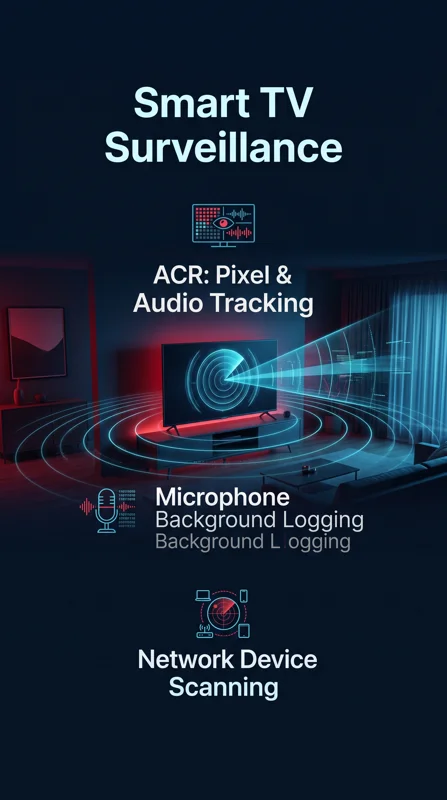
Recent investigations into LG TV security vulnerabilities have highlighted a much broader industry problem. While specific brands face the heat, the overarching reality is that data harvesting is the new baseline for consumer electronics.
The Hidden Reality: How every tv company is spying on you
You might wonder why hardware prices have dropped so drastically over the last decade. The answer is simple: hardware is no longer the primary product. Because every tv company is spying on users, they can sell displays at a loss and make up the difference by selling your behavioral data.
This data collection relies heavily on deceptive user agreements. When you first boot up a device, you are often presented with confusing menus designed to trick you into accepting optional tracking policies just to use the basic interface.
| Tracking Method | How It Works | Primary Risk |
|---|---|---|
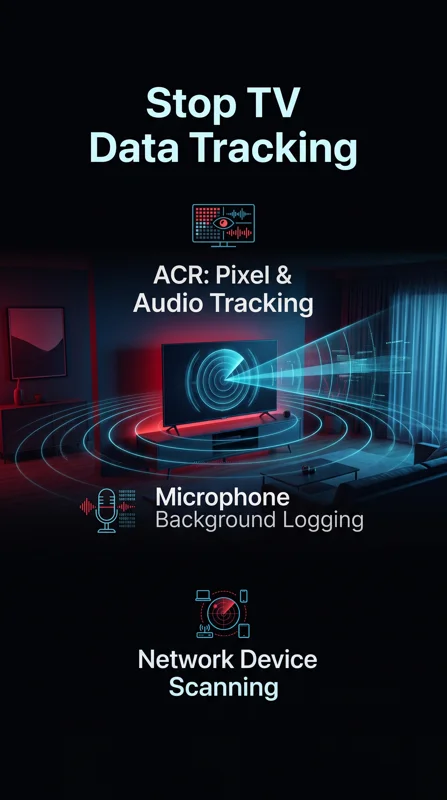
| Automatic Content Recognition ACR | Matches on-screen pixels and audio to a database. | Builds a complete profile of your viewing habits. |
| Microphone Logging | Listens for wake words and records background noise. | Potential capture of private, sensitive conversations. |
| Network Scanning | Scans your local Wi-Fi for other connected devices. | Maps your household technology ecosystem. |
Why every tv company is spying using Automatic Content Recognition (ACR)
The backbone of this surveillance is Automatic content recognition ACR. This technology grabs snippets of video and audio playing on your screen, converts them into digital fingerprints, and sends them to third-party advertisers.
It does not matter if you are watching a built-in app, a cable box, or a Blu-ray player. If the image is on the screen, ACR can identify it. This is a primary reason why every tv company is spying—the ACR data is incredibly lucrative.
“The television in your living room is no longer just a screen; it is an active surveillance node feeding a multi-billion dollar data brokerage industry.”
Take Action: Stop the fact that every tv company is spying
If you want to stop TV data tracking, you must take active steps during and after the initial setup. First, never use your primary personal email address when setting up a new device. Create a dedicated burner email specifically for Smart TV privacy settings.
Second, read the setup screens carefully. You only need to accept the legally required End User License Agreements (EULA) for the device to function. Always opt out of anything labeled “Enhanced Viewing,” “Smart TV Experience,” or “Interactive Services.”
Advanced Steps: Securing your home when every tv company is spying
To take your privacy a step further, the best method is to disconnect the screen from the internet entirely. You can turn off Wi-Fi and unplug the Ethernet cable, effectively turning your expensive smart display into a “dumb” monitor.
Once disconnected, plug in a secure third-party streaming device. While no tech giant is perfect, using a device like an Apple TV provides better baseline security because Apple does not use ACR technology.
| Security Step | Action Required | Effectiveness |
|---|---|---|
| Burner Account | Use a fake email for device registration. | High – severs ties to your real identity. |
| Disable Voice Control | Turn off TV voice control in the main settings menu. | Medium – prevents accidental audio recording. |
| Dumb TV Method | Disconnect Wi-Fi and use an external streaming box. | Maximum – completely stops native OS tracking. |
If you absolutely must keep the display connected to the web, you need to turn off TV voice control immediately. Voice assistants are notorious for recording audio snippets long after the wake word is spoken.
Final Thoughts on why every tv company is spying
The unfortunate reality is that we must actively defend our households because every tv company is spying by default. Until robust federal privacy laws are enacted, the burden of security falls entirely on the consumer.
Digital rights organizations like the Electronic Frontier Foundation continue to advocate for strict data minimization requirements to combat these invasive practices.
“We need comprehensive privacy laws that mandate opt-in consent, ensuring users are never tricked into surrendering their household data.”
By understanding exactly how every tv company is spying, you can reclaim your living room and enjoy your entertainment without sacrificing your personal privacy.
Frequently Asked Questions
Is it true that every tv company is spying on users?
Yes, almost all major manufacturers utilize Automatic Content Recognition and user data tracking to monetize your viewing habits.
What is Automatic Content Recognition ACR?
ACR is a technology that analyzes the pixels and audio on your screen to identify exactly what movies, shows, or ads you are watching.
How can I stop TV data tracking during setup?
Read the agreements carefully and only accept the mandatory basic EULA. Decline all optional agreements related to enhanced viewing or interactive features.
Should I turn off TV voice control?
Yes, disabling voice control prevents the microphone from accidentally recording background conversations and sending them to manufacturer servers.
What were the recent LG TV security vulnerabilities?
Security researchers recently discovered that certain LG models could be rooted via local networks, potentially allowing remote access to the camera and microphone.
How do I turn my smart TV into a dumb TV?
Simply factory reset the device, skip the Wi-Fi setup process, do not plug in an Ethernet cable, and use a dedicated HDMI streaming box instead.
Does using an external streaming box solve the problem?
It significantly reduces the risk if your television is offline, though you must still manage the privacy settings on the streaming box itself.
Disclaimer: This article is for informational purposes only. Privacy settings, hardware capabilities, and manufacturer policies are subject to change. Always review the latest terms of service for your specific devices.