When technology enthusiasts look at the evolution of virtual reality, hardware launches are often defined by their software companions. For the Steam Deck, Valve introduced Aperture Desk Job. For the original Valve Index, they released the critically acclaimed masterpiece, Half-Life: Alyx.
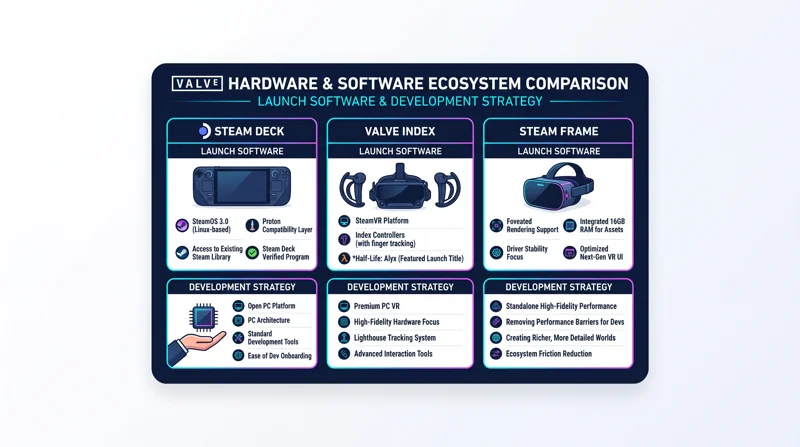
When the new Steam Frame headset was announced, many industry watchers expected a brand-new title. Instead, Valve chose to bring back Alyx, setting up a native standalone experience. This strategic pivot raised eyebrows across the gaming community.
Why Valve Considered Making a New VR Game for the Steam Frame
Before committing to the heavy engineering challenge of porting a massive PC VR title to mobile architecture, Valve engineers briefly discussed alternative paths. Creating a smaller tech demo or a mini-game collection was heavily debated internally.
However, the development team quickly realized that optimizing an existing masterpiece would provide deeper value. Rather than spreading resources thin on a new title, Valve focused on maximizing the potential of the entire Steam catalogue on the new hardware platform.
| Hardware Project | Launch Software | Development Strategy |
|---|---|---|
| Steam Deck | Aperture Desk Job | Dedicated short tech demo |
| Valve Index | Half-Life: Alyx | Full-length flagship PC VR game |
| Steam Frame | Standalone Half-Life: Alyx | Optimization pioneer for mobile VR |
Tackling the Ludicrous Task of Porting Alyx
Adapting a game designed for high-end gaming rigs to run natively on mobile smartphone-class processors felt entirely unrealistic at first. Valve engineers noted that the undertaking was extraordinarily difficult.
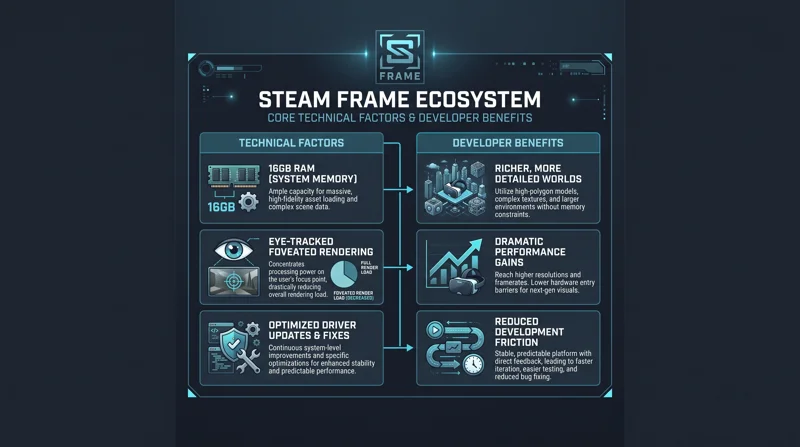
The breakthrough came through innovative tracking technologies, specifically advanced foveated rendering. Combined with 16GB of high-speed system memory, these features transformed an impossible concept into a working reality.
“It was so worth it to just do that work anyway because we found so much stuff. So many bugs, performance things in the driver.”
According to Valve staff members, tackling this massive technical challenge directly improved the overall software stack. Every optimization discovered during the porting process directly benefits other developers building for the platform.
How SteamOS Compatibility Drives the Frame Ecosystem
A core pillar of the Steam Frame ecosystem is seamless compatibility. Valve wanted users to launch both traditional flat screen titles and immersive virtual reality experiences straight from their existing accounts.
By refining performance benchmarks through rigorous optimization work, Valve established a reliable framework. Developers can now utilize the Steam Frame Verified program to ensure optimal performance.
| Technical Factor | Impact on Steam Frame | Developer Benefit |
|---|---|---|
| 16GB RAM | Enables native standalone execution | Higher fidelity asset loading |
| Foveated Rendering | Reduces processing load significantly | Stable frame rates on mobile chipsets |
| Driver Fixes | Eliminates persistent software bottlenecks | Easier porting for third-party studios |
The Future of Standalone Virtual Reality
While some fans still wish Valve had dedicated resources to an entirely original virtual reality release, the broader ecosystem gains immense long-term stability. The architectural knowledge gained from this project sets a high standard for standalone headsets.
For more official news, updates, and hardware specifications, you can check out Steam Official Website for upcoming details.
“All the fixes we got in for Alyx, the vast majority of them are applicable to basically anything that’s running on the Frame.”
Frequently Asked Questions
Why did Valve consider making a new VR game for the Steam Frame?
Valve briefly evaluated creating a smaller tech demo or dedicated mini-game collection to highlight the launch of their new standalone headset before shifting focus to optimizing existing experiences.
Why was porting Half-Life: Alyx considered a ludicrous task?
The game was originally engineered for high-performance PC hardware without mobile power compromises, making it extremely difficult to scale down to a Snapdragon mobile CPU architecture.
What key technologies made standalone Alyx possible?
Advanced foveated rendering, accurate eye-tracking technology, and a robust 16GB RAM configuration were the primary technological breakthroughs that enabled native execution.
How does the Steam Frame Verified program help developers?
It provides direct technical assistance and compatibility ratings, allowing third-party studios to optimize their titles using performance fixes discovered during internal Valve testing.
Can users play flat screen games on the Steam Frame?
Yes, the headset supports running both traditional flat screen titles and immersive virtual reality games directly from a user’s existing library.
Did Valve completely abandon the idea of new hardware-paired games?
Not entirely, but for the Steam Frame rollout, prioritizing the catalog-wide compatibility and optimization of Alyx yielded greater long-term infrastructure benefits.
Where can users find more details about Steam Frame hardware?
Users can track official announcements, device specifications, and release timelines directly through the official Steam platform and developer documentation portals.
Disclaimer: This article is for informational purposes only and relies on early developer statements regarding hardware capabilities and software roadmaps.