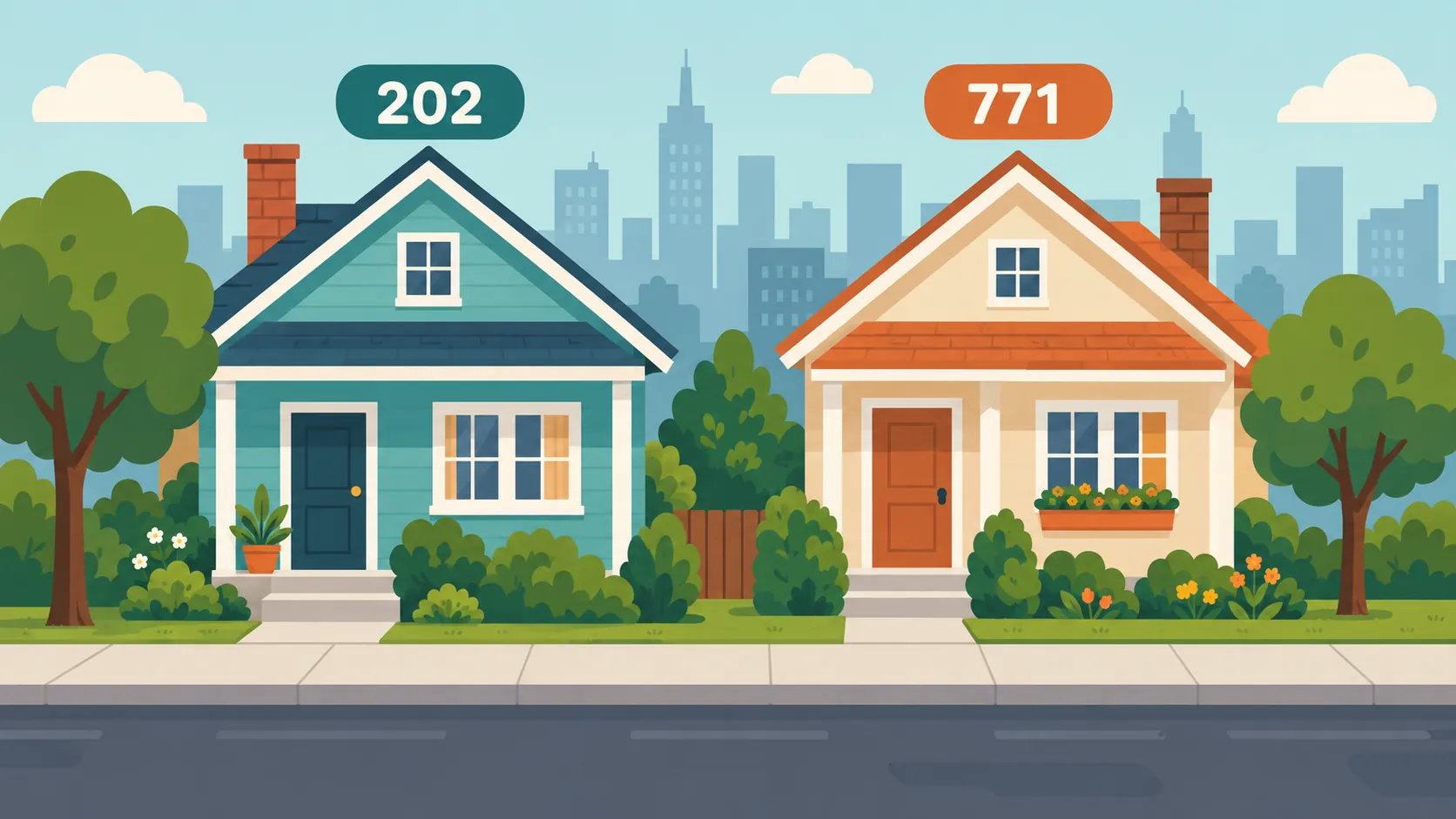
Picture two houses on the same street. Same city, same ZIP code. One neighbor’s number starts with one area code, and the house next door has a completely different one. It looks like a mistake, but it is not. It is the result of an area code overlay, and overlays are arriving in more parts of the country every year. The short video below explains the whole system.
Why area codes run out of numbers
Every area code has 792 assignable prefixes. A prefix is the three digits in the middle of a phone number, between the area code and the last four digits, and each prefix holds 10,000 numbers. Phone companies receive numbers one prefix at a time. When the last prefix is gone, the area code is exhausted and the region needs more numbers.
Split vs overlay: the two fixes
The geographic split
The older method cuts the region into two or more parts. One part keeps the old area code, and the rest must switch to a new one. Roughly half of the customers end up changing their area code, which means new stationery, new signs, and a wave of misdialed calls.
The overlay
The newer method lays the new area code over the same region. Nobody changes their number. New phone lines, or people adding a second line, may simply receive the new code. That is exactly how two neighbors end up with different area codes.
Why overlays won
NANPA, which administers the North American Numbering Plan, calls overlays the industry-preferred form of relief. According to its 2022 annual report, no geographic split has been recommended, approved, or implemented anywhere in the United States since 2007. A split forces thousands of people to change their numbers; an overlay inconveniences almost no one.
The trade-off: 10-digit dialing
Overlays come with one condition. When two area codes serve the same place, seven digits no longer tell the network where a call should go. The FCC therefore requires 10-digit dialing for local calls in overlay areas. The rule, from the FCC’s Second Report and Order 96-333, guarantees dialing parity: calls work the same way whether a customer has the old code or the new one, and no provider gains an advantage over another.
How an overlay rolls out
- Permissive period. Seven-digit and 10-digit calls both work, and carriers encourage you to start dialing 10 digits.
- Mandatory 10-digit dialing. A seven-digit call reaches a recording that asks you to hang up and dial the area code. That recording stays on indefinitely.
- The new code opens. Numbers from the new area code start being assigned when mandatory dialing begins or shortly after.
Dates are set state by state, and some states also require a 1 before the area code on local calls. Your carrier’s notice or your state regulator’s announcement carries the exact dates.
What to update before the mandatory date
- Saved contacts, speed dials, and call forwarding entries.
- Automatic dialers and business phone systems, including PBX and VoIP setups.
- Anything that dials out on its own: alarm systems, fax machines, and entry systems.
- Make sure children know the full 10-digit home number, and tell family, friends, and business contacts.
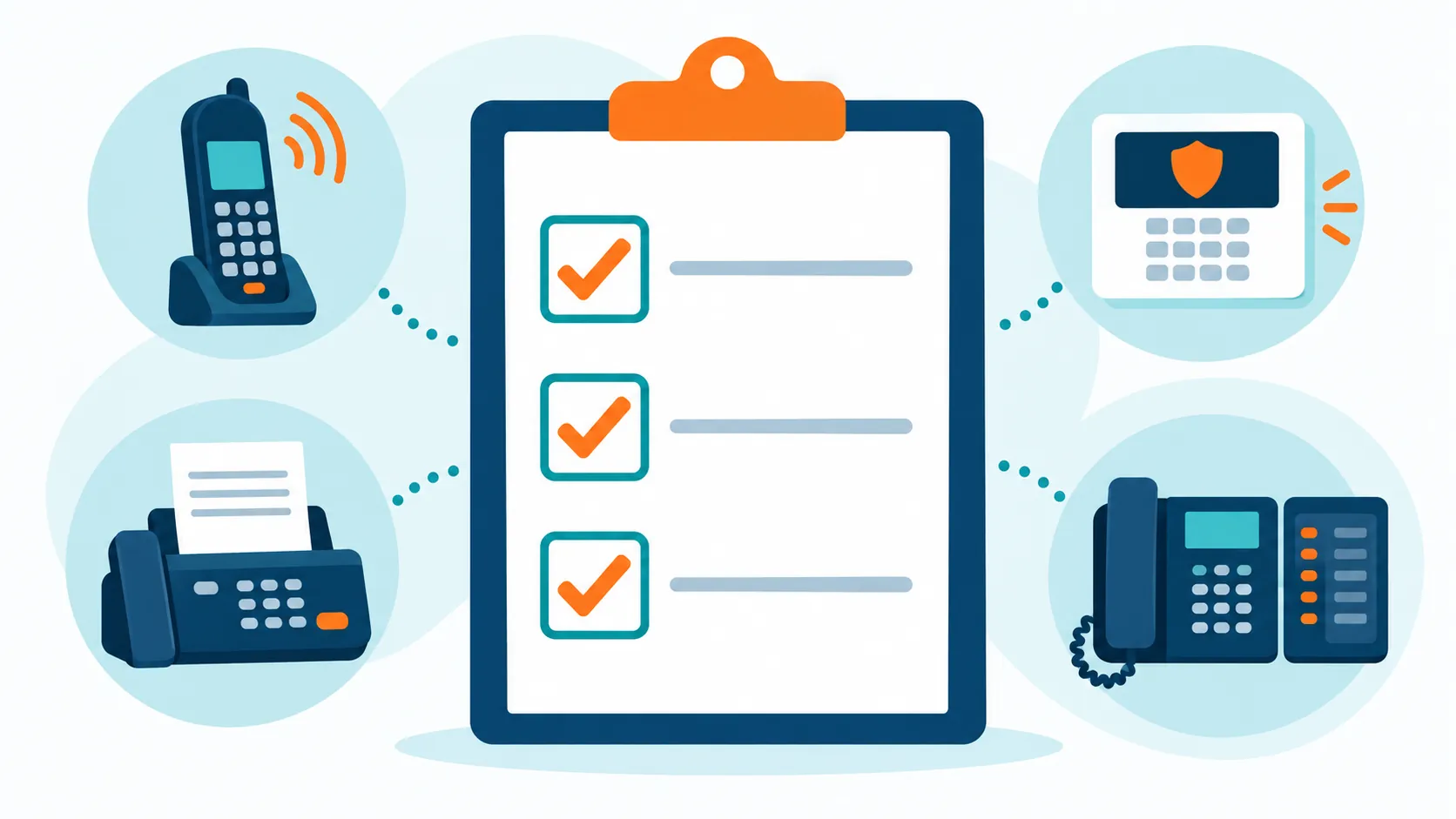
NANPA adds one more point: if your equipment needs an update, the cost is the customer’s responsibility, and updates should be finished before the mandatory dialing date.
What stays the same
Local calls stay local, and your rates and calling area do not change. Three-digit services keep working: 911 and 988 everywhere, plus 211, 311, 411, 511, 611, 711, and 811 where available.
Examples you may remember
In October 2021, the 202 area code began mandatory 10-digit dialing so 771 could be overlaid on the same area. Separately, more than 80 area codes switched to 10-digit dialing during the nationwide transition that made 988 the three-digit number for the Suicide and Crisis Lifeline; that change was separate from overlays.
We track individual overlays in our area code guides, including the 771 overlay on 202, the 878 overlay in Pittsburgh, the 220 overlay over 740 in Ohio, and the 628 overlay in the San Francisco Bay Area.
How to check your own area
NANPA publishes a public dialing plan report for every area code, and carriers and state commissions announce their own dates. If a recording ever tells you to dial the area code, take it as good news: nothing is broken, your area simply gained a second code.