5G Network Slicing Architecture in 2026: A Technical Guide for CTOs and Network Architects emergentmind
Strategic Context for 5G Network Slicing Architecture
“By 2026, network slicing has become the foundational mechanism for operators to realize differentiated service categories. This technical isolation is the key driver for 5G Network API Monetization, turning network capabilities into scalable revenue streams.”
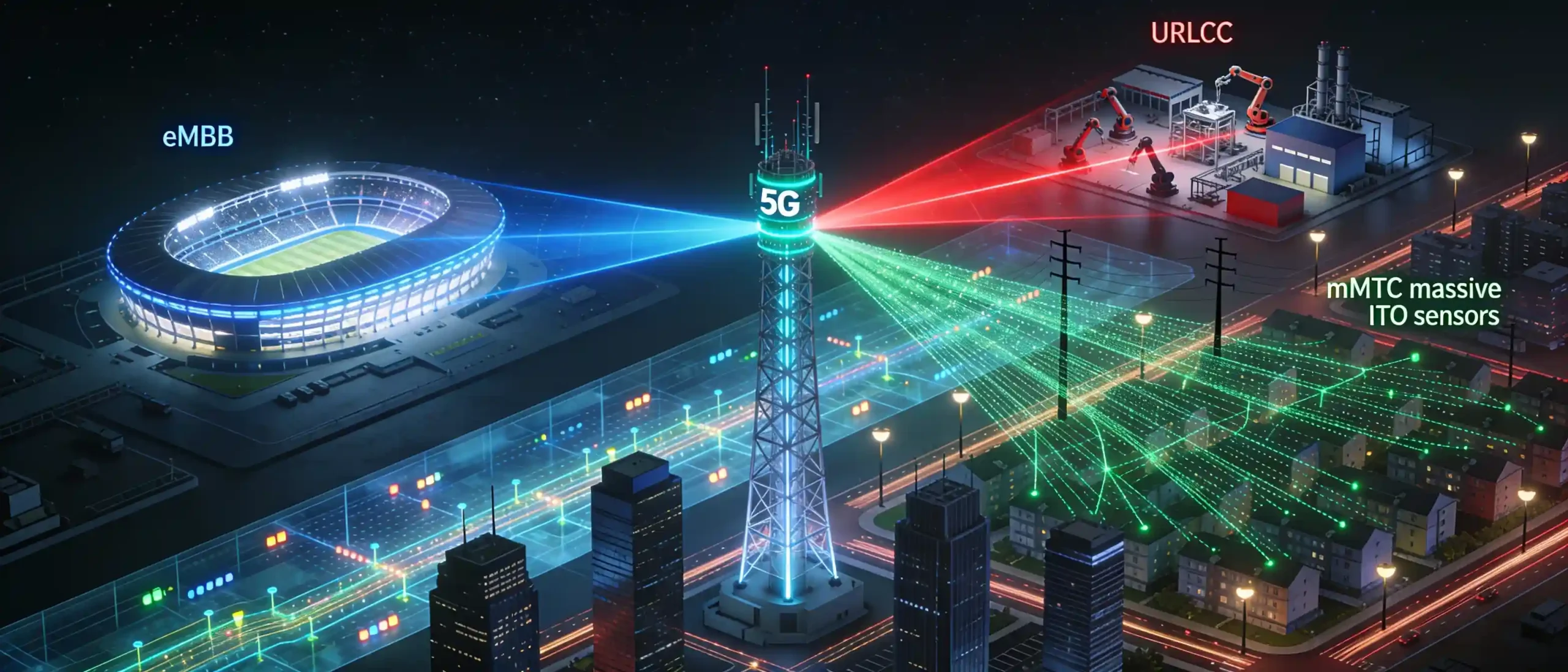
5G Network Slicing Architecture has moved from innovation pilot to mainstream design pattern in 2026, especially as standalone (SA) 5G deployments dominate new core rollouts and enterprise private 5G becomes a primary growth vector for operators. Network slicing enables multiple logical networks—each with distinct QoS, security, and operational policies—to coexist over a shared physical RAN, transport, and core infrastructure. 3GPP and ETSI formalized slicing concepts in Release 15–18, and GSMA’s 2025–2026 guidance now treats slicing as the foundational mechanism to realize differentiated eMBB, URLLC, and mMTC service categories at scale.gsma+3
For CTOs and network architects, 5G Network Slicing Architecture is no longer only about technology isolation; it is a programmable service abstraction that ties SLA definitions, orchestration, and charging into a coherent lifecycle, mediated through CSMF, NSMF, and NSSMF functions.3gpp+1
Architectural Overview of 5G Network Slicing Architecture
At a high level, 5G Network Slicing Architecture follows a layered model:
-
Service Layer: Business-defined services, SLAs, and vertical use cases.
-
Network Slice Management Layer: CSMF, NSMF, NSSMF functions mapping service requirements into slice blueprints and resource instantiation.3gpp+1
-
Resource Layer: RAN, transport, and 5G core network functions, plus cloud/edge resources delivering slices.journal.itrc+1
3GPP SA5 defines management requirements and orchestration flows in TS 28.530/28.531/28.533, with ETSI TS 128 533 (V18.4.0) consolidating management-plane expectations for Release 18.etsi+2
Management Plane: CSMF, NSMF, and NSSMF
Role of CSMF in 5G Network Slicing Architecture
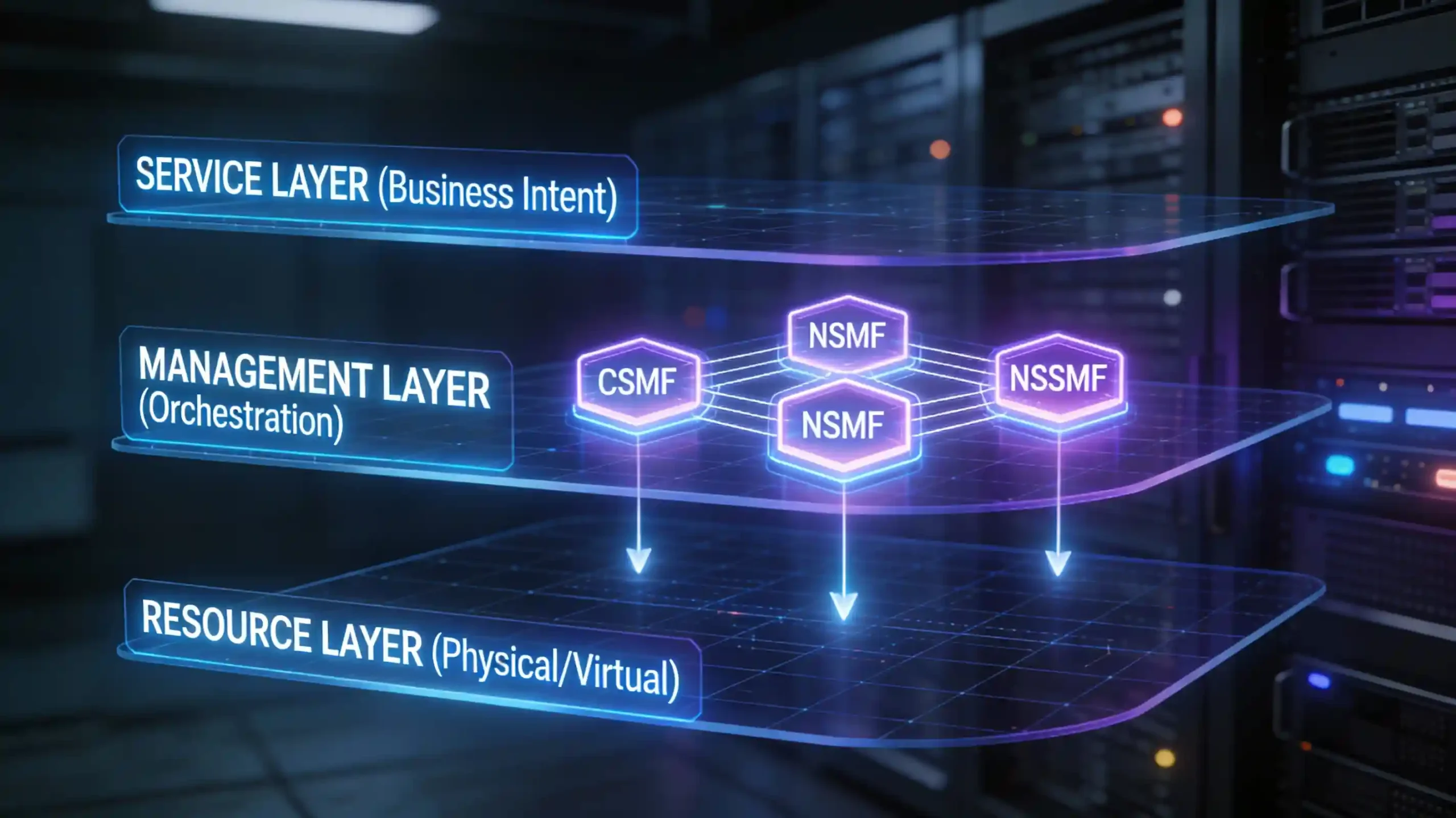
The Communication Service Management Function (CSMF) sits at the service-management boundary and transforms high-level customer service requirements into network slice requirements.3gpp+1
In 5G Network Slicing Architecture, the CSMF typically:
-
Ingests service definitions from BSS/ordering portals (e.g., “premium eMBB for stadium,” “URLLC for robotic cell,” “massive IoT for smart agriculture”).emergentmind+1
-
Translates service-level KPIs (latency, throughput, reliability, isolation level, geography, device count) into Network Slice Requirements (NSR) aligned with 3GPP slice descriptors.3gpp+1
-
Maps customer-facing SLAs to one or more network slice instances (NSIs) or subnet slice instances (NSSIs) managed by NSMF and NSSMF.
From a CTO perspective, CSMF is where product portfolio and 5G Network Slicing Architecture intersect: it enforces catalog consistency and ensures that what sales teams promise can be represented as manageable slices.gsma+1
Role of NSMF in 5G Network Slicing Architecture
The Network Slice Management Function (NSMF) is responsible for end‑to‑end lifecycle management of network slice instances that span multiple domains (RAN, transport, core).3gpp+1
Key NSMF responsibilities in 5G Network Slicing Architecture:
-
Derive end‑to‑end slice blueprints from NSR and available slice templates (NSTs).etsi+1
-
Coordinate NSSMFs across domains (RAN, Transport, Core) to instantiate and modify subnet slice instances.aarna+1
-
Perform ongoing monitoring and closed‑loop assurance – adjusting slice resources to meet SLA KPIs (latency, throughput, reliability) in near real time.sciencedirect+1
-
Manage lifecycle operations: creation, modification (scale up/down), healing, and termination of NSIs.3gpp+1
In practice, NSMF is implemented via NFV MANO platforms, cloud-native orchestrators, or specialized slice orchestration products that align with IETF’s concept of “network slice” mapping to 3GPP slice instances.arxiv+1
Role of NSSMF in 5G Network Slicing Architecture
The Network Slice Subnet Management Function (NSSMF) manages slice resources within a specific technology/domain: typically RAN, Core, or Transport (sometimes also Edge).aarna+1
In 5G Network Slicing Architecture, an NSSMF:
-
Consumes domain-specific subnet slice templates (e.g., RAN slice parameters like PRB reservation, scheduler configuration, and QoS flow mappings).journal.itrc+1
-
Interacts with domain controllers (RAN CU/DU controllers, SDN controllers, 5GC orchestrators) to allocate and configure resources consistent with slice intent.sciencedirect+1
-
Provides KPIs and telemetry to NSMF (e.g., RAN-level throughput, PRB utilization, DRB latency) to support cross-domain assurance.sciencedirect+1
The split between NSMF and NSSMF in 5G Network Slicing Architecture enables modularity and allows vendors/operators to independently evolve RAN, core, and transport controllers while preserving an end‑to‑end slice abstraction.aarna+2
Technical Table 1 – Management Functions in 5G Network Slicing Architecture
| Function | Scope in 5G Network Slicing Architecture | Inputs | Outputs | Typical Implementations |
|---|---|---|---|---|
| CSMF | Service-to-slice translation (business to NSR) | Service orders, SLA definitions, catalog data | Network Slice Requirements (NSR), slice profiles | BSS/OSS layer, service orchestration systems 3gpp+1 |
| NSMF | End‑to‑end slice management across RAN, Transport, Core | NSR, NSTs, domain capabilities | NSIs, slice lifecycle events, cross-domain KPIs | NFV MANO / cross-domain orchestrators 3gpp+2 |
| NSSMF | Domain-specific slice subnet management (RAN/Core/Transport) | Subnet slice templates, resource inventories | NSSIs, domain KPIs, config to domain controllers | RAN controllers, SDN controllers, 5GC managers aarna+1 |
Service Categories in 5G Network Slicing Architecture: eMBB, URLLC, mMTC
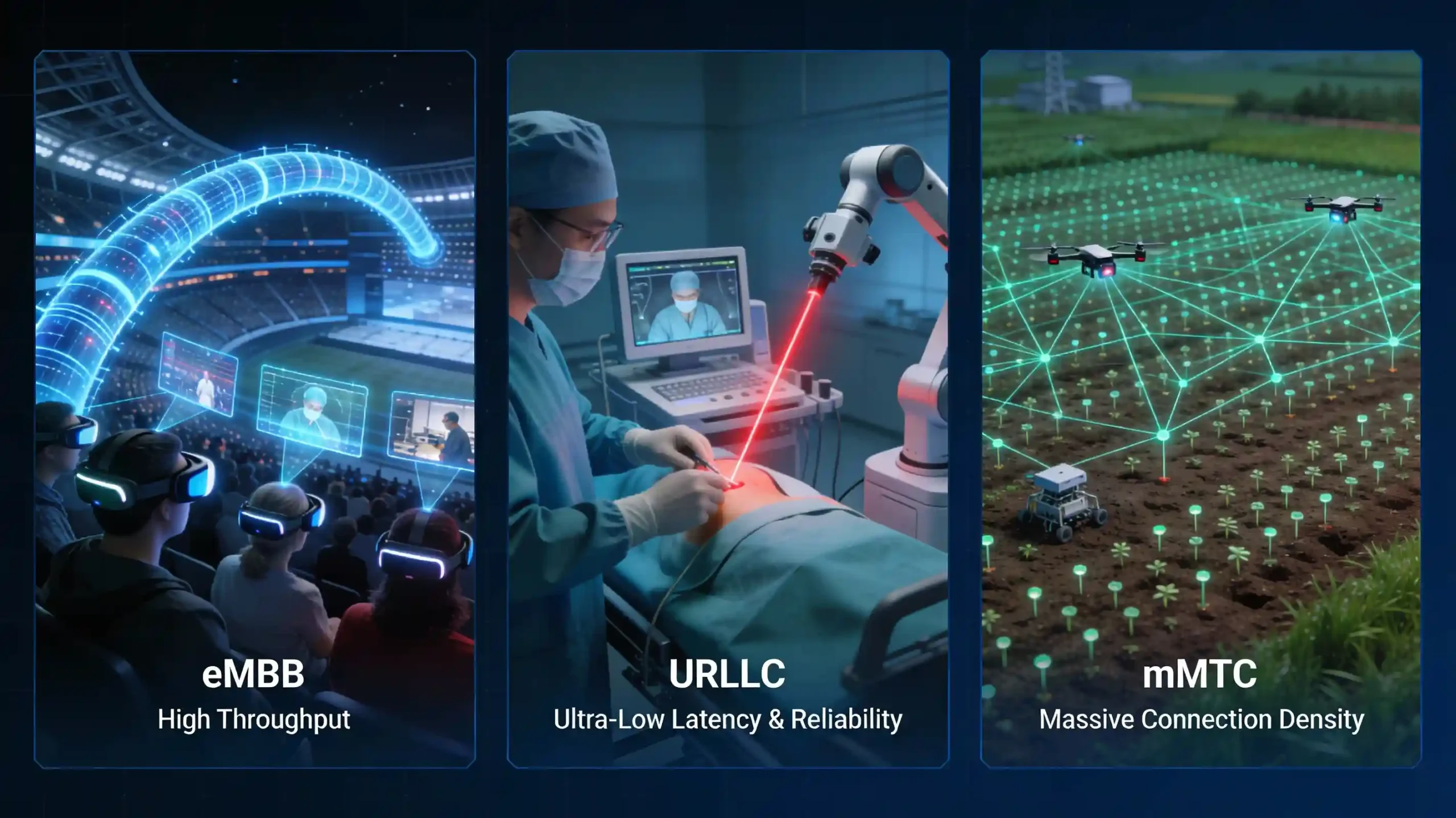
3GPP originally defined three canonical service types—eMBB, URLLC, and mMTC—which remain the primary reference profiles in 5G Network Slicing Architecture in 2026, even as newer 5G-Advanced and pre‑6G service modes emerge.pcb.cadence+1
-
Enhanced Mobile Broadband (eMBB): High throughput, moderate latency, wide coverage (consumer and enterprise broadband, video streaming, AR/VR).pcb.cadence
-
Ultra-Reliable Low-Latency Communications (URLLC): Deterministic low latency and extremely high reliability for mission-critical applications.itu+1
-
Massive Machine-Type Communications (mMTC): Ultra-high connection density with low per-device throughput and extremely efficient signaling.itu+1
Technical Comparison in 5G Network Slicing Architecture
Within 5G Network Slicing Architecture, each service type maps to one or more slice templates with specific performance envelopes.emergentmind+1
Technical Table 2 – Slice Performance Metrics in 5G Network Slicing Architecture
| Slice Type | Target Latency (E2E, typical) | Peak Throughput (per user/device) | Connection Density (devices/km²) | Reliability (success prob.) | Example S-NSSAI Profiles |
|---|---|---|---|---|---|
| eMBB | ~10–40 ms (urban macro) | 100 Mbps–1 Gbps | 10³–10⁴ | 99.9% | eMBB slice for consumers & enterprises pcb.cadence+1 |
| URLLC | 0.5–5 ms (user-plane) | 10–100 Mbps | 10²–10³ | 99.999% (“five nines”) | URLLC slice for factory automation arxiv+1 |
| mMTC | 50–500 ms | kbps per device | 10⁵–10⁶ | 99%+ (per message) | mMTC slice for smart metering pcb.cadence+1 |
How 5G Network Slicing Architecture Maps KPIs to Resources
For each slice template in 5G Network Slicing Architecture:
-
Latency targets influence selection of edge vs. centralized UPF placement, scheduler configuration, and queuing policies.journal.itrc+1
-
Throughput determines PRB reservation in RAN, transport bandwidth allocation, and core NF sizing.etsi+1
-
Connection density influences signaling optimization, random access configuration, and device state management strategies (RRC Inactive, etc.).pcb.cadence+1
-
Reliability affects redundancy strategies (dual connectivity, packet duplication, diversity paths) and admission control thresholds.arxiv+1
End‑to‑End 5G Network Slicing Architecture Components
RAN Domain in 5G Network Slicing Architecture
In the RAN, 5G Network Slicing Architecture typically uses logical partitioning at the gNB DU/CU:
-
Slice-aware scheduling with QoS Flow → DRB → Slice mappings.etsi+1
-
PRB and power allocation policies per slice (e.g., reserving certain PRB percentages for URLLC).emergentmind+1
-
Multiple PDU sessions associated with different S-NSSAI values per UE for multi-slice connectivity.journal.itrc+1
NSSMF for RAN interacts with RAN Intelligent Controllers (RICs) or vendor RAN controllers, leveraging xApps/rApps for dynamic slice optimization.sciencedirect
Transport Domain in 5G Network Slicing Architecture
Transport slicing uses:
-
Segment routing (SR-MPLS/SRv6) or SD-WAN abstractions to create logical transport slices with guaranteed bandwidth and latency.ietf+1
-
QoS classes and queuing policies aligned with 5G QoS identifiers (5QI).
-
Integration with NSMF to automatically instantiate transport slice segments in conjunction with RAN/core slices.ietf+1
Core Domain in 5G Network Slicing Architecture
Core slices are realized by:
-
Instantiating multiple logical instances of core NFs (AMF, SMF, UPF, PCF) per slice or group of slices.etsi+1
-
Or using slice-aware NF behavior where one NF instance handles multiple slices with strict policy separation.3gpp+1
-
Deploying dedicated UPFs for URLLC near the edge, while eMBB/mMTC UPFs may remain centralized.itu+1
NSSMF for core coordinates with cloud-native infrastructure (Kubernetes, OpenStack, or bare metal) to realize scaling and placement decisions.arxiv+1
Private 5G Networks and 5G Network Slicing Architecture
By 2026, GSMA Intelligence reports that over 1,200 private cellular networks are either live or in deployment, with a large subset using slice-based architectures for multi-tenant and multi-service designs. 5G Network Slicing Architecture is central to making private 5G economically viable by allowing operators and enterprises to share infrastructure while offering deterministic behavior per tenant and per use case.tatacommunications-ts+2

Deployment Models for Private 5G Using 5G Network Slicing Architecture
-
Operator-Hosted Slices for Enterprises (Public 5G + Slices)
-
Enterprises consume logical slices from the MNO’s public 5G SA network.gsma
-
NSMF orchestrates dedicated S-NSSAI-based slices spanning macro RAN sites and dedicated indoor small cells.tatacommunications-ts+1
-
Ideal for distributed enterprises and moderate control requirements.
-
-
Hybrid Private 5G: On-Prem RAN/Core + Operator Backing
-
Localized RAN and UPF on-premises, with control-plane NFs in the operator’s cloud.gsmaintelligence+1
-
Slices span on-prem and wide-area network, aligned via NSMF and interoperable NSSMFs.
-
Suitable for industrial campuses needing URLLC plus eMBB.
-
-
Standalone Private 5G with Internal Slicing
-
Enterprise fully owns 5G core and RAN within its campus, operating its own 5G Network Slicing Architecture with CSMF/NSMF/NSSMF.unity-6g+1
-
Slices differentiate use cases: OT traffic vs. IT, robots vs. AR, guest vs. employee.
-
Often integrated with enterprise IT orchestration and security domains (Zero Trust, microsegmentation).
-
Industry-Specific Use Cases with 5G Network Slicing Architecture
Technical Table 3 – Industry Use Cases in 5G Network Slicing Architecture
| Industry | Slice Types (eMBB/URLLC/mMTC) | SLA Priorities in 5G Network Slicing Architecture | Example Implementation (2026) |
|---|---|---|---|
| Manufacturing / Industry 4.0 | URLLC + mMTC + eMBB | URLLC for robots (sub‑5 ms), mMTC for sensors, eMBB for staff AR | On-prem private 5G with URLLC slice for motion control, mMTC for telemetry, eMBB for video. unity-6g+1 |
| Healthcare | URLLC + eMBB | URLLC for telesurgery, eMBB for imaging & telepresence | Hospital network with URLLC slice for surgical robots and eMBB for telemedicine. gsma+1 |
| Logistics & Ports | eMBB + URLLC + mMTC | URLLC for AGVs, mMTC for RFID/IoT, eMBB for workforce devices | Port private 5G network, with slices by asset class. tatacommunications-ts+1 |
| Smart Cities | mMTC + eMBB | mMTC for meters/sensors, eMBB for public Wi‑Fi/video | City‑wide slices for utilities and city services. pcb.cadence+1 |
| Energy & Utilities | mMTC + URLLC | mMTC for metering, URLLC for grid control | Grid operators use URLLC slices for protection relays. itu+1 |
Private 5G Implementation Considerations
“While slicing provides logical isolation, it must be reinforced with a robust 5G Network API Security framework to protect the service-based architecture from potential exposure threats.”
CTOs designing private 5G with 5G Network Slicing Architecture must address:
-
Slice design vs. VLAN/VPN design: Map existing logical segregation (OT vs. IT, guest vs. secure) into S-NSSAI-based slices instead of or in addition to VLANs/VPNs.tatacommunications-ts+1
-
Governance model: Align CSMF workflows with enterprise service catalog and change management tools; ensure NSMF decisions integrate with ITSM.tatacommunications-ts+1
-
Multi-cloud/edge distribution: Place slice components (especially UPF and application workloads) near where they are consumed, managed via NSSMF policies and cloud orchestrators.arxiv+1
-
Security integration: Combine slice isolation with Zero Trust principles, integrating identity, micro‑segmentation, and telemetry with enterprise SOC and SIEM systems.unity-6g+1
Gartner’s 2025–2026 edge and private network forecasts note that enterprises using 5G Network Slicing Architecture in private deployments achieve significantly better observability and policy consistency across campuses than those relying solely on legacy Wi‑Fi/VPN segmentation.gsmaintelligence
Orchestration, Automation, and Closed Loop in 5G Network Slicing Architecture
By 2026, 5G Network Slicing Architecture is converging with intent-based networking and closed‑loop automation.emergentmind+1
Intent and Policy in 5G Network Slicing Architecture
Intent models let architects specify outcomes rather than manual configurations:
-
“For this factory line, ensure <5 ms latency and 99.999% availability between robots and controllers.”
-
“For this stadium slice, prioritize video uplink capacity during events.”
CSMF interprets these intents, NSMF translates them into slice design, and NSSMF translates to domain-specific configurations.arxiv+1
Closed-Loop Assurance
5G Network Slicing Architecture increasingly relies on AI/ML to drive continuous optimization:
-
Telemetry collection: RAN KPIs (PRB utilization, SINR, RLC retransmissions), core KPIs (UPF latency, packet loss), transport KPIs (jitter, link utilization).sciencedirect+1
-
Policy evaluation: Compare measured KPIs against slice SLAs; detect drift.
-
Automated actions: Trigger scale-out of NFs, migration of UPFs closer to edge, or re-allocating PRBs across slices.arxiv+1
Early production systems for industrial slicing show significant OPEX savings and SLA compliance improvements when closed-loop automation is integrated with 5G Network Slicing Architecture.unity-6g+1
Vendor and Ecosystem Directions for 5G Network Slicing Architecture (2026)
GSMA’s 2025 report on slicing and private networks emphasizes that 5G SA, dynamic network slicing, and exposure through APIs are critical for unlocking enterprise revenue, particularly in manufacturing, healthcare, and logistics. Vendor roadmaps (Ericsson, Nokia, and others) are aligned around:gsmaintelligence+1
-
Cloud-native NSMF/NSSMF built on Kubernetes and open APIs to interoperate across multi-vendor RAN, core, and transport.emergentmind+1
-
Standardized northbound interfaces to OSS/BSS and service orchestration platforms, enabling slice-as-a-service offerings.gsma+1
-
Integration with network APIs (via NEF and API gateways) to expose slice-aware capabilities to external application developers in a secure, controlled manner.gsma+1
Gartner’s 2025 enterprise survey indicates that by 2028, over 25% of large enterprises deploying private 5G will consume at least one “slice‑as‑a‑service” offering from MNOs or neutral hosts, making operationalized 5G Network Slicing Architecture a competitive differentiator for operators.gsmaintelligence
Design Recommendations for CTOs and Network Architects
When designing or modernizing 5G Network Slicing Architecture for 2026 and beyond, CTOs and network architects should:
-
Treat slicing as a service catalog construct, not just a network construct
-
Build slice templates aligned with business services and vertical solutions (e.g., “Smart Factory URLLC,” “Hospital mMTC”).tatacommunications-ts+1
-
Implement a robust CSMF layer tightly integrated with BSS and product catalogs.3gpp+1
-
-
Standardize on open management interfaces and models
-
Invest in NSMF/NSSMF automation and AI-driven assurance
-
Use analytics and AI to observe, predict, and optimize slice performance in near real time.sciencedirect+1
-
Implement closed-loop control loops with clear safety boundaries, especially for URLLC slices.itu+1
-
-
Integrate security, identity, and compliance by design
-
Combine 5G Network Slicing Architecture with Zero Trust, robust NEF/API security, and strong identity management.unity-6g+1
-
Map regulatory constraints (e.g., data localization, sector-specific regulations) into slice design and placement.mpirical+1
-
-
Optimize for private 5G and hybrid deployments
-
Design slices that can extend from public macro networks into on‑prem environments with consistent SLA semantics.gsmaintelligence+1
-
Offer flexible “slice-as-a-service” to enterprises, using NSMF as the coordination hub across operator and enterprise domains.gsmaintelligence+1
-
Conclusion
By 2026, 5G Network Slicing Architecture has matured into a central pillar of 5G SA core deployments, private 5G strategies, and enterprise connectivity solutions. With CSMF, NSMF, and NSSMF providing a structured management framework; eMBB, URLLC, and mMTC offering well-understood performance baselines; and private 5G networks increasingly built on slice constructs, network slicing is no longer experimental—it is operational and revenue-relevant.gsma+2
CTOs and network architects that standardize on robust 5G Network Slicing Architecture, embrace automation and AI-based assurance, and tightly couple slicing with service catalogs and security will be best positioned to capture enterprise opportunities in the 2026–2030 horizon.gsmaintelligence+2
- https://www.emergentmind.com/topics/network-slicing
- https://www.gsma.com/solutions-and-impact/technologies/networks/digest/new-5g-network-slicing-report/
- https://journal.itrc.ac.ir/article-1-541-en.pdf
- https://www.etsi.org/deliver/etsi_ts/128500_128599/128533/18.04.00_60/ts_128533v180400p.pdf
- https://www.3gpp.org/news-events/3gpp-news/sa5-5g
- https://www.3gpp.org/technologies/slice-management
- https://www.etsi.org/deliver/etsi_tr/138900_138999/138913/17.00.00_60/tr_138913v170000p.pdf
- https://www.aarna.ml/post/network-slicing-nssmf-architecture
- https://www.sciencedirect.com/science/article/pii/S0140366424003384
- https://arxiv.org/html/2505.24051v2
- https://www.ietf.org/lib/dt/documents/LIAISON/liaison-2025-12-19-3gpp-tsg-sa-teas-ls-response-on-ietf-network-slice-application-in-3gpp-5g-end-to-end-network-slice-attachment-1.docx
- https://resources.pcb.cadence.com/blog/2023-5g-embb-urllc-and-mmtc-service-categories-for-a-smarter-tomorrow
- https://www.itu.int/dms_pub/itu-s/opb/jnl/S-JNL-VOL3.ISSUE3-2022-A42-PDF-E.pdf
- https://arxiv.org/html/2508.20205v1
- https://www.tatacommunications-ts.com/our-perspective/5g-network-slicing-and-private-5g-unlocking-synergies/
- https://www.gsmaintelligence.com/research/industry-checkpoint-private-networks-q3-2025
- https://unity-6g.eu/wp-content/uploads/2025/10/Network-Slicing-for-Industrial-Automated-Services____CSCN_2025_.pdf
- https://www.gsmaintelligence.com/research/operators-in-focus-enterprise-opportunity-survey-dashboard-2025
- https://www.mpirical.com/knowledge-base/data-privacy-in-5g-networks
- https://www.p1sec.com/blog/privacy-regulations-in-telecom-how-gdpr-and-ccpa-shape-mobile-network-security